
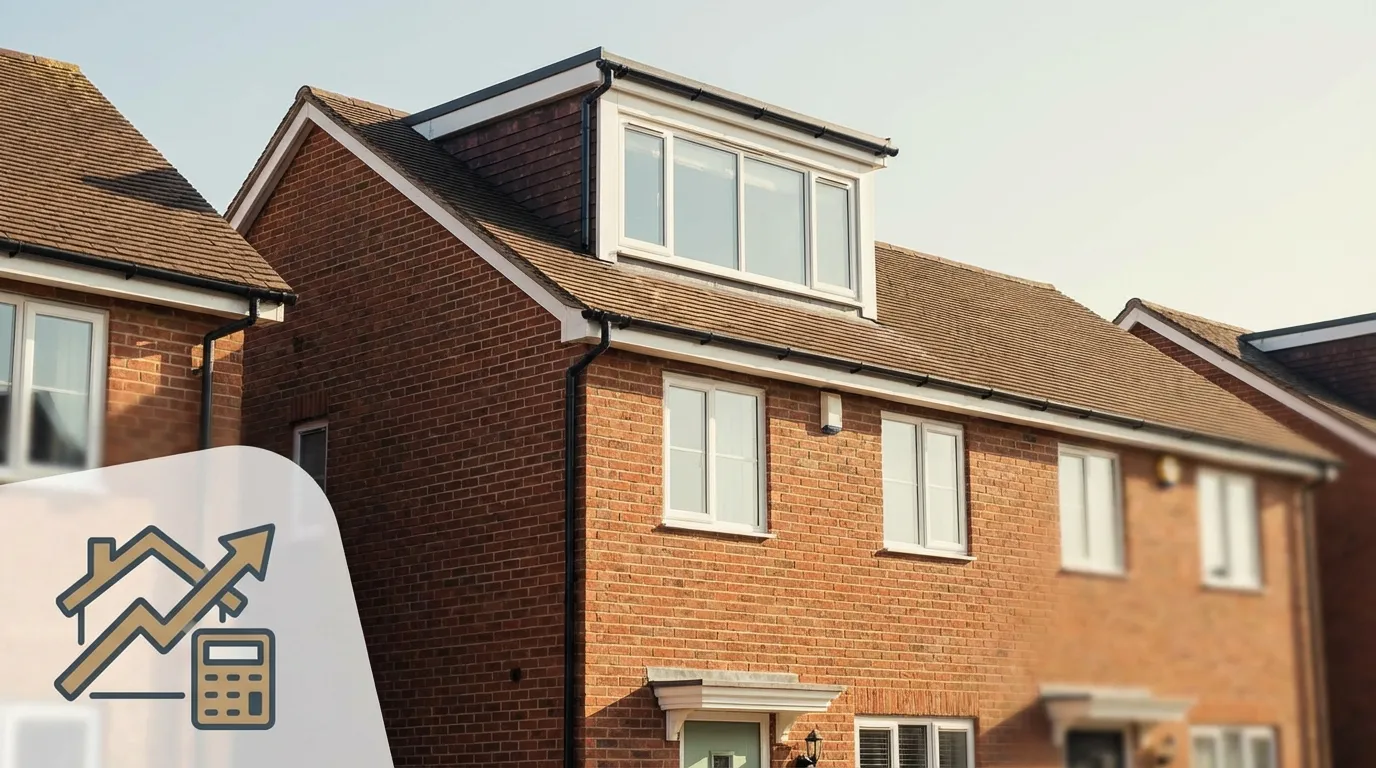
For homeowners in Bournemouth and across Dorset, a loft conversion represents one of the most rewarding upgrades you can make to your property. Rather than facing the expense and disruption of moving house, converting your unused roof space into a fully functional room is a practical and financially sound route to gaining extra living space and increasing your home's market value.
Before any project gets underway, however, understanding the loft conversion cost is essential for confident decision-making. In this guide, we break down everything you need to know about loft conversion prices in 2026, covering the types of conversion available, the factors that shape overall costs, professional fees, planning requirements, and what return you can realistically expect on your investment. Whether you are at the very beginning of your planning journey or ready to request a quote, we hope this guide gives you the clarity and confidence to take the next step.
What Is the Average Loft Conversion Cost in 2026?
Nationally, loft conversion costs in the UK in 2026 range broadly from around £25,000 for a straightforward Velux or rooflight conversion to over £75,000 for a more complex mansard build. The average loft conversion cost for the most popular type, a dormer conversion, typically falls between £35,000 and £55,000 depending on specification, size, and location.
For homeowners in Bournemouth and the wider South of England, costs tend to sit above the national average. This reflects higher labour rates and strong demand for skilled building contractors in the region. When budgeting for your project, it is important to use local estimates rather than national figures, which are often pulled downward by lower costs in other parts of the country.
Several factors are also shaping loft conversion prices in 2026 specifically. Material supply chains continue to present cost pressures, energy costs affecting manufacturing have kept component prices elevated, and the availability of skilled tradespeople across the South of England remains constrained. These are all factors we account for when preparing detailed, accurate costings for our clients.
Types of Loft Conversion and Their Costs
The type of loft conversion you choose will have the most significant influence on your overall project cost. Below, we outline the four most common types, along with estimated price ranges for Bournemouth and Dorset in 2026.
Velux (Rooflight) Conversion: £25,000 to £35,000
The most affordable option, a Velux or rooflight conversion involves fitting skylights into the existing roof slope without altering the roof structure itself. It suits properties with sufficient natural headroom and is typically the quickest type to complete. Because structural works are kept to a minimum, loft conversion prices at this level are the most accessible for homeowners working within a tighter budget.
Dormer Loft Conversion: £35,000 to £55,000
The dormer conversion is the most widely chosen option for UK homeowners. It involves constructing a box-shaped extension to the existing roof that raises headroom and considerably increases usable floor space. Dormer conversions can be designed to suit a wide range of property types found across Bournemouth, from terraced Victorian homes to post-war semi-detached properties, making them a flexible and popular choice. Costs vary depending on the size of the dormer and the internal specification required.
Hip-to-Gable Conversion: £45,000 to £65,000
Particularly suited to detached and semi-detached homes with a sloping hip roof, this conversion type replaces the hipped end of the roof with a vertical gable wall. This dramatically increases the internal loft space and is often combined with a rear dormer to maximise the usable floor area. The additional structural work involved is reflected in the cost, but so is the significant gain in living space.
Mansard Loft Conversion: £50,000 to £75,000+
A mansard conversion is the most structurally extensive option, involving a near-vertical rear wall and a significantly altered roof structure. It creates the greatest increase in floor area of any conversion type and is frequently chosen by homeowners seeking to maximise the space gained from their roof. Costs sit at the premium end of the loft conversion price scale, reflecting the considerable structural work required.
For a useful reference on cost breakdowns across these conversion types, the Federation of Master Builders provides a comprehensive guide to loft conversion costs for UK homeowners.
What Factors Affect Loft Conversion Cost?
Beyond the conversion type itself, a range of additional variables will influence the final cost of your project. Understanding these factors helps you set a realistic budget from the outset.
Existing Roof Structure
Properties with traditional cut roofs are generally simpler and less costly to convert. Homes built from the 1960s onwards often feature trussed rafter roofs, which require the roof framework to be restructured before conversion work can begin. This adds to both time and overall project cost, and a structural engineer's assessment is essential at the outset.
Size and Floor Area
Loft conversion prices are closely linked to the size of the space being converted. Most contractors will quote on a per-square-metre basis, with typical rates in the South of England running from around £1,500 to £2,500 per m² for a fully finished conversion, inclusive of design, structural work, and fit-out.
Level of Internal Specification
A loft converted to a basic bedroom specification costs considerably less than one finished to a premium standard with bespoke joinery, underfloor heating, or high-specification sanitaryware. Flooring, lighting, and fixture choices all contribute to the overall loft renovation cost and should be considered carefully during the planning stage.
Adding a Bathroom or En-Suite
Adding en-suite facilities is one of the most popular upgrades homeowners request, and for good reason: it adds both practical value and a meaningful uplift to your property's market worth. Depending on specification, a bathroom or en-suite installation typically adds between £3,000 and £8,000 to your overall project cost.
Materials
Key material components include structural steel beams, timber flooring joists and framing, insulation, roof windows, plasterboard, and finishing materials. As a broad guide, materials typically account for between 40% and 50% of the total project cost. In 2026, material prices remain elevated relative to pre-2020 levels, and this should be factored into your budgeting.
Location
Bournemouth and Dorset sit within the premium South of England market when it comes to building costs. Skilled labour rates here are meaningfully higher than in many parts of the country. Building your budget around local estimates, rather than national averages, is always the more reliable approach.
Professional Fees and Labour Costs
Labour typically represents the largest single component of any loft conversion budget. In addition to the main building contractor, several specialist professionals are likely to be involved in your project.
Architect or Architectural Technologist: £750 to £1,500
Even where planning permission is not required, professional design drawings are needed for building regulations approval. An architect or architectural technologist will produce the necessary plans and specifications for a standard residential conversion, typically at a cost of between £750 and £1,500.
Structural Engineer: £500 to £1,000
A structural engineer is essential for calculating load requirements, specifying steelwork, and ensuring the conversion meets structural safety standards. Fees for a residential loft project typically range from £500 to £1,000.
Building Regulations Fees: £500 to £1,000+
Building regulations approval is required for all loft conversions and is administered by your local authority's building control service. Fees generally range from around £500 to over £1,000, depending on the scope of the project.
Building Contractor
The main contractor manages the core construction work, including carpentry, roofing, first and second fix electrical work, plumbing, plastering, and internal finishing. Choosing a contractor who manages all trades directly simplifies communication, protects your programme, and means there is a single point of accountability throughout the project.
Planning Permission and Building Regulations
One of the most common questions we hear from homeowners in Bournemouth is whether planning permission is needed for a loft conversion. The reassuring answer is that most conversions qualify under Permitted Development rights, meaning that planning permission is not required, provided the project falls within defined limits.
For terraced houses, the additional roof volume must not exceed 40 cubic metres. For detached and semi-detached properties, the limit is 50 cubic metres. The conversion must also not extend beyond the plane of the existing roof slope on the principal elevation. The Planning Portal provides full guidance on Permitted Development rights for loft conversions and is the best starting point for checking whether your property qualifies.
Regardless of planning status, building regulations approval is mandatory for all loft conversions. Regulations cover structural integrity, fire safety and means of escape, staircase design, thermal performance, and ventilation standards. Your building contractor and structural engineer should be fully conversant with these requirements, and compliance will be checked by a building control officer at key stages throughout the build.
If your home is a listed building or sits within a designated conservation area, additional restrictions may apply and full planning permission could be required. We always advise clients to confirm their position with the relevant local planning authority before any work begins.
What Can You Use Your Converted Loft For?
One of the great advantages of a loft conversion is the flexibility it offers for how you use the new space. The most popular use cases we see among our clients across Bournemouth and Dorset include:
- An additional bedroom, ideal for growing families or adding market appeal ahead of a sale
- A home office, a consistently popular choice as remote and hybrid working has become mainstream
- An en-suite master bedroom, combining a double bedroom with private bathroom facilities to add both practicality and significant property value
- A guest suite, providing comfortable, self-contained accommodation for visiting family or friends
- A children's room or hobby space, offering a dedicated area away from the main living areas
Each of these use cases carries different cost implications depending on the level of fit-out required. We are always happy to talk through the options during a free initial consultation and help you identify the approach that best suits your needs and budget.
Loft Conversion vs. Home Extension
A question we are often asked is whether a loft conversion represents better value than a ground floor extension. In many cases, particularly in Bournemouth where outdoor space is highly valued, a loft conversion delivers comparable or greater usable floor space for a similar or lower overall cost, without reducing the size of your garden.
Ground floor extensions generally require more significant groundwork, drainage works, and foundations, all of which add to both cost and programme. A loft conversion works within the existing structure of the building and in many cases causes less disruption to daily life during the construction phase. That said, both project types have their strengths, and the right choice always depends on your property's individual characteristics.
You can explore our approach to both projects on our loft conversions and extensions page.
Does a Loft Conversion Add Value to Your Home?
A well-planned loft conversion is one of the strongest performing home improvements in terms of return on investment. Research from Nationwide Building Society, reported in October 2025, found that adding a loft conversion incorporating a double bedroom and bathroom can increase the value of a three-bedroom home by as much as 24%. For many homeowners in Bournemouth, where average property values are already significant, that uplift can substantially outweigh the initial cost of the project.
Even at the lower end of the value increase range, a professionally executed loft conversion consistently delivers a strong return and represents one of the most financially rewarding improvements available to UK homeowners.
Tips for Managing Your Loft Conversion Budget
Getting the most from your investment starts with thorough preparation. Here are some practical steps to help you manage your loft conversion costs effectively.
Request a detailed, itemised quotation. A thorough quote from your contractor should clearly set out all costs, including materials, labour, professional fees, and building regulations charges. Vague or summary-level quotes make it difficult to compare contractors fairly and can lead to unexpected costs once the project is underway.
Finalise your specification before work starts. Changes made after construction has begun are one of the most common causes of budget overruns. Taking time to agree all materials, finishes, and fixtures in advance helps avoid costly variations to the contract.
Use a single main contractor. Engaging one contractor to manage all trades from start to finish simplifies communication, maintains your programme, and provides a clear single point of accountability throughout.
Allow a contingency budget. We recommend setting aside around 10% to 15% of your total build cost to cover any unforeseen circumstances, particularly in older properties where hidden issues can occasionally emerge during structural work.
Our Approach at Premier Building Services
At Premier Building Services, we have supported homeowners across Bournemouth and Dorset through loft conversions and a wide range of residential building projects. Our approach is built around clear communication, detailed upfront costings, and consistent quality at every stage.
Every project begins with a free consultation and site visit, during which we discuss your requirements, assess feasibility, and provide straightforward guidance on timescales and next steps. This is followed by a detailed, itemised quotation, so you know precisely what is included and what your investment will deliver, with no hidden surprises.
We act as the main contractor throughout, managing the entire project from initial consultation through to final handover. Critically, you will deal with the same team from start to finish, providing genuine continuity and confidence that every aspect of the project is being managed with care.
Our clients reflect this in their feedback. One homeowner described their experience as follows: "A first-class build delivered on time and on budget, attracting ongoing praise from everyone who sees it. Steve and his team are meticulous, enthusiastic and proactive, offering valuable suggestions while maintaining a high-quality finish with minimal disruption. They were also the tidiest builders we've ever worked with." Another client noted: "100% as per plan and cost. Nothing a problem to these guys!"
To find out more about our experience and how we work, visit our about us page.
Request Your Free No-Obligation Quote Today
If you are considering a loft conversion in Bournemouth, Dorset, or the surrounding area, the best first step is a conversation with our team. We offer a free, no-obligation assessment and quote, giving you an honest picture of costs, feasibility, and timescales with no commitment required.
Get in touch with us today to book your free consultation and take the first step towards making the most of your home.