
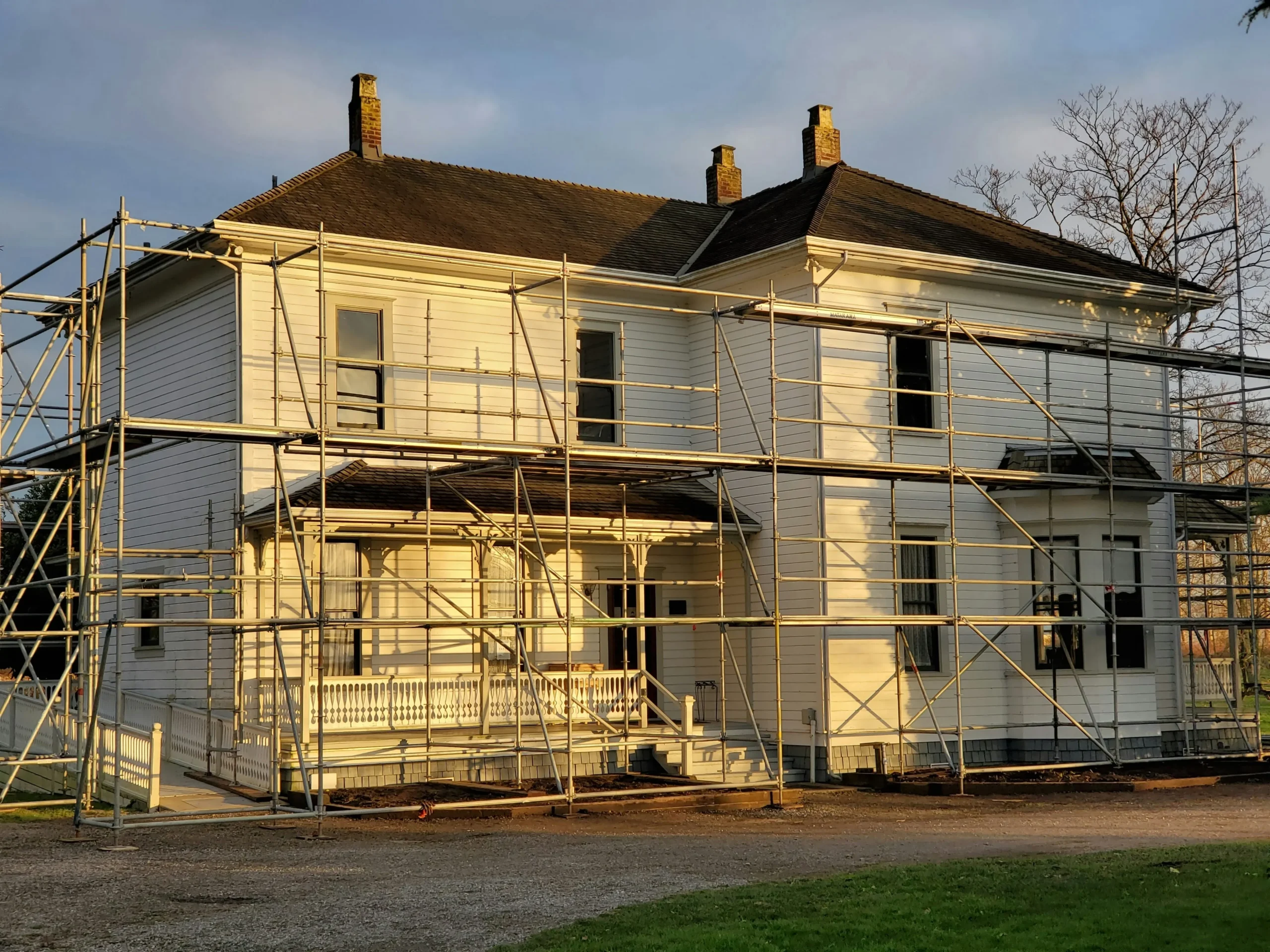
If you are planning a full home renovation, the first question is usually the same: what will this actually cost? A whole-house project is the biggest building decision most homeowners make, and the honest answer is that it depends on the size of the property, its condition and how far you want to take it. General industry ranges do give a rough idea, though, and it is worth having one in mind before you speak to anyone.
The figures below are rough estimates based on general industry ranges, not a fixed price list or a commitment from us. Every property is different, and the only way to know the real cost of your project is a written quote based on a site visit.
What Does a Full House Renovation Usually Cost?
Industry sources put the typical cost of a whole-house renovation in the UK at £40,000 to £120,000 or more, a range that is common because “renovation” encompasses very different projects. In the trade, renovation, refurbishment and remodelling are often used interchangeably, so you will see all three terms in quotes and cost guides, but what matters is the scope behind the word.
A light refresh, covering redecoration, new flooring, minor repairs and a basic kitchen or bathroom update, typically sits at the lower end, with many guides quoting figures in the region of £25,000 to £45,000 for an average three-bedroom house. A full refurbishment, which usually means a new electrical installation, new heating, replastering, a new kitchen and bathrooms, and updated finishes throughout, typically costs between £55,000 and £110,000 for the same-sized property. Where structural changes, extensions or high-specification finishes are involved, budgets can pass £120,000 and keep climbing. Published national averages, often around the mid-£70,000s for a three-bed house, are only a rough guide because they blend projects of very different scope.
Cost Per Square Metre: A Quick Way to Sense-Check a Quote
Many UK cost guides price renovation per square metre, and it is a handy way to sense-check a figure even though it is never exact. As a broad guide, light refurbishment is often cited at £1,000-£1,500 per square metre, while a full refurbishment is frequently quoted at £1,200-£3,000 per square metre, depending on the source and specification. For a typical 90-square-metre three-bedroom home, that range explains why totals vary so much between guides.
Treat any per-metre rate with caution. It assumes a standard level of work and finish, and it is quickly overshadowed by items that do not scale with floor area, such as a structural opening, a new staircase, or a complete rewire. It is best used to judge whether a quote is in a believable range, not to calculate your budget on its own.
What a Whole-House Renovation Usually Includes, and Where the Money Goes
A full renovation tends to combine several smaller projects into a single programme. The big-ticket items are normally the electrical and heating work, plastering and joinery, the kitchen and the bathrooms, with structural alterations added where the layout is changing. Labour is typically the largest share of the budget, often around half, because so many trades are involved, and each must be sequenced properly with the others. This is the kind of project we manage as the main contractor, coordinating all trades under a single programme.
Kitchens and bathrooms are usually the most variable line items. A modest bathroom refit and a high-specification one can differ by many thousands of pounds, and the same is true of kitchens, which is why we have written separate guides to kitchen renovation costs and bathroom renovation costs. Windows, flooring, decoration and external works make up much of the rest, and are the items most often left out of early budgets.
What Affects Where You Land in the Range
The condition of the property is the biggest single factor. A house that needs new wiring, new pipework and replastering will cost far more than one where the services are sound, and the work is mainly cosmetic. Size matters, but so does layout: opening up rooms or moving walls requires structural calculations, steel beams, and building control, which is the territory of our structural alterations service and adds both cost and programme time.
Specification is the next lever, since the gap between standard and premium finishes can double the cost of an otherwise identical project. Location also plays a part. Labour rates are noticeably higher in London and the South East, and some industry examples show that refurbishment costs tens of thousands more in Greater London than in northern England, so a national average will not match every postcode.
How Long Does a Full House Renovation Take?
Industry timelines vary with scope. A cosmetic refresh is commonly put at around two to four months, a full refurbishment at roughly four to six months, and a project involving structural work, extensions or planning permission at nine months to a year. Lead times for kitchens, windows and bespoke joinery can add weeks before work starts, and a house that is lived in during the works will normally take longer than an empty one, because trades have to work around you.
Budgeting Properly: Contingency, Phasing and Hidden Costs
The most common budgeting mistake is not allowing for the unexpected. Opening up old walls, floors, and roof spaces often reveals issues that could not be seen beforehand, such as damp, outdated wiring, or a weak structure, so most advice suggests holding a contingency of at least ten to fifteen per cent on top of the quoted figure. A building survey before you commit to a property is money well spent for the same reason.
Phasing is another way to manage cost. Some homeowners tackle the structural and services work first and leave finishes or secondary rooms for later, which spreads the spend and lets you live in parts of the house. It is also worth comparing like-for-like quotes carefully, because two builders can arrive at very different totals simply because one includes plastering, flooring and waste removal and the other does not. Our guide to choosing a builder explains what to check before you commit.
Our Process
Whatever the size of the project, our process starts the same way: an initial consultation and site visit to understand the property and what you want to achieve before any figures are discussed. We then provide a detailed, itemised quotation for your specific project, a real price rather than a ballpark, before any work begins. Once you are happy to proceed, we move into design, planning, and advice, coordinating with architects and structural engineers as needed. Construction is fully managed on our side, with every trade coordinated so you are not left chasing them, and the project finishes with a proper handover, including a final walkthrough and snagging check.
Frequently Asked Questions
No. These are general UK market figures from industry data, not our price list. Every project is different, and we provide a detailed written quotation specific to your property after a free site visit.
Not always. Much internal renovation work does not require planning permission, although building regulations and building control sign-off may apply to structural changes, electrical works, and heating. Where permissions or approvals are required, we coordinate with architects and structural engineers.
Yes. Many homeowners phase the work around budget and how much disruption they can accommodate. We agree on the sequence with you during the consultation and quotation stage.
Most industry advice suggests at least ten to fifteen per cent on top of the quoted figure, particularly on older properties where hidden issues are more likely.
The only reliable way is a site visit and a detailed written quotation, which we offer free with no obligation.
Ready to Get an Accurate Quote?
General figures are a useful starting point, but every home is different. Contact Premier Building Services for a free, no-obligation quotation from the Bournemouth builders who have been renovating homes across Dorset since 1985.