
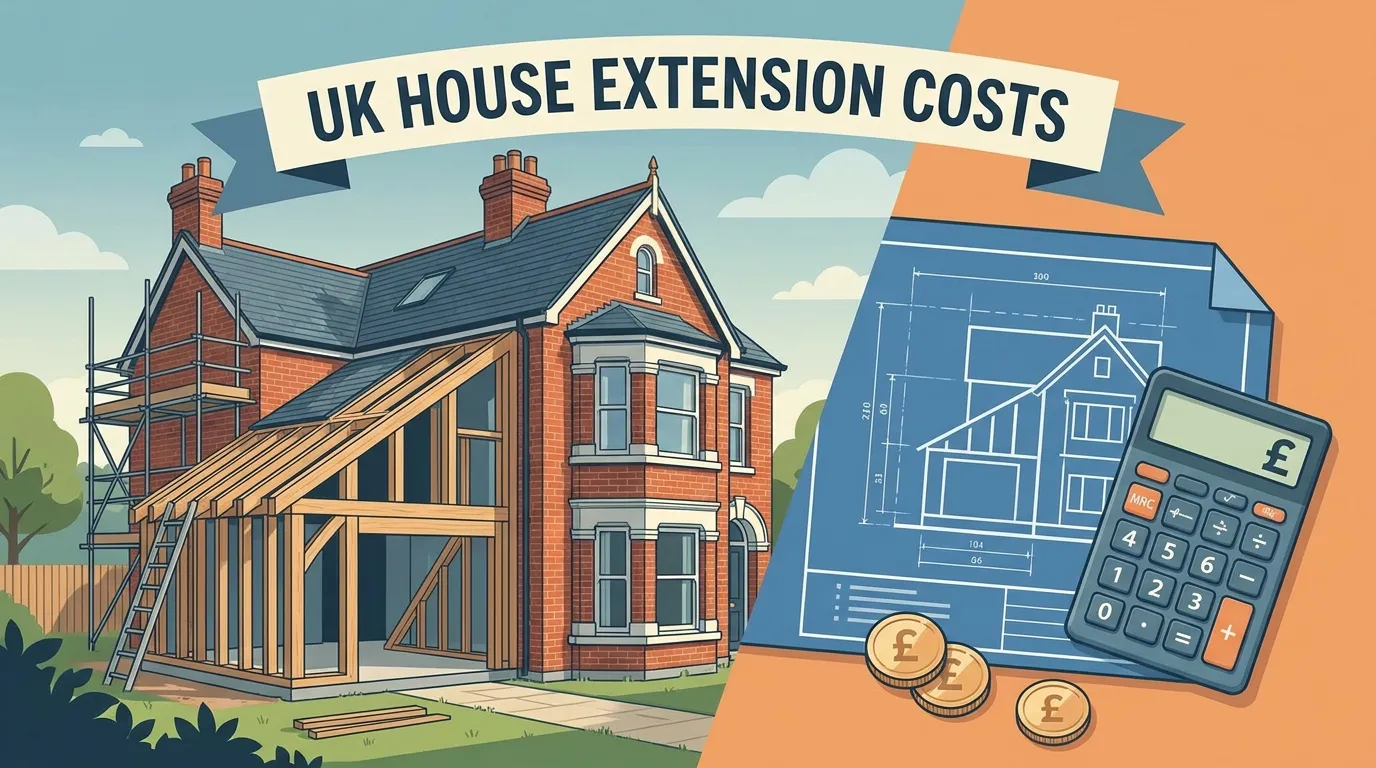
Planning a house extension is one of the most rewarding investments you can make in your home. Whether you want to create a larger kitchen, add a new bedroom, or open up your living space, understanding the house extension cost before you get started is essential. At Premier Building Services, we work with homeowners across Bournemouth and Dorset to deliver high-quality extensions that are completed on time, on budget, and to a standard that lasts.
What Does a House Extension Cost in the UK?
The cost of a house extension in the UK varies considerably depending on a range of factors. As a general guide, a single-storey extension typically costs between £30,000 and £140,000, while a double-storey extension can range from £108,000 to £180,000 or more, according to data from Checkatrade's house extension cost guide.
On a per-square-metre basis, you can expect to pay somewhere in the region of £1,800 to £3,500 per m² for a standard build, though costs in the South of England, including Dorset, may sit towards the higher end of this range due to regional labour and material pricing.
These are broad estimates. The best way to understand what your specific project will cost is to receive a detailed, personalised quote from an experienced local builder who has assessed your property in person.
What Affects the Cost of a House Extension?
Several key factors influence how much your extension will ultimately cost:
Size and scope. The larger the extension, the higher the overall cost. A modest rear extension to enlarge a kitchen will cost considerably less than a full wrap-around or two-storey addition.
Type of extension. Single-storey rear extensions are generally the most cost-effective starting point. Side-return extensions, double-storey additions, and wrap-around designs all bring different structural and planning requirements that affect the overall price.
Materials and specification. The choice of materials for both the exterior and interior of your extension has a significant bearing on cost. Facing brickwork to match your existing property, high-specification glazing, bi-fold doors, or underfloor heating all represent additional investment, but they add lasting value and long-term appeal to your home.
Location and access. Regional labour rates, site accessibility, and ground conditions all play a role. If access to your property is restricted, such as through a tight side passage or on a terraced street, this requires more careful planning and additional time on site.
Planning and building regulations. Depending on the size and position of your proposed extension, you may need to apply for planning permission. All extensions must also comply with building regulations, which cover structural integrity, fire safety, insulation standards, and more. You can check whether your project falls within permitted development rights on GOV.UK and review the building regulations requirements to understand what formal approvals may be needed.
Foundation and structural work. If your extension requires significant groundworks, new drainage, or structural alterations to the existing property, these elements will add to the overall cost.
Budgeting for Your Extension
A widely recommended approach is to set aside a contingency of around 10 to 15 per cent on top of your agreed build budget to cover any unforeseen issues that arise during construction. This is a sensible precaution for any building project, regardless of how thoroughly it has been planned.
It is also worth factoring in the full range of costs beyond the build itself. These can include architect or designer fees, structural engineer reports where required, planning application fees, and the cost of fixtures, fittings, and finishes. A transparent, itemised quotation from your builder will help you understand exactly where your budget is going and give you confidence that nothing has been overlooked.
Planning Permission and Building Regulations
Not every extension requires full planning permission. Many straightforward single-storey rear extensions fall under permitted development rights, meaning you can proceed without a formal planning application, provided the works remain within specific size limits. However, this is not always the case, particularly if your property is in a conservation area, is a listed building, or if the proposed extension exceeds certain thresholds.
Regardless of whether planning permission is required, all extensions must meet current building regulations. The Federation of Master Builders' house extension guide provides a thorough overview of what is typically involved, while the Planning Portal offers clear guidance on when building regulations approval is needed.
Energy Efficiency and Insulation
Modern building regulations set high standards for insulation and energy efficiency in new extensions. A well-insulated extension not only reduces your energy bills but keeps the space comfortable throughout the year. It is well worth discussing insulation options, glazing performance, and heating solutions with your builder at the earliest opportunity. These decisions are far more straightforward to make at the planning and design stage than after construction is underway.
Interior Finishing and Exterior Materials
The interior finish of your extension, including flooring, plastering, paintwork, and joinery, forms a significant part of the overall budget. Choosing quality materials from the outset will serve you well in the long run, reducing the likelihood of early wear or replacement.
On the exterior, the materials used for walls, roofing, and cladding should complement the existing character of your home. Matching brickwork, render, or other finishes can all be used effectively depending on the style and age of your property, and a skilled builder will advise you on what will work best.
How We Work With You at Premier Building Services
At Premier Building Services, we understand that a house extension is a significant investment, and we place transparency, communication, and quality at the heart of everything we do.
Every project starts with a consultation and site visit, where we take the time to assess your property, discuss your requirements, and provide clear guidance on feasibility, timescales, and next steps. From there, we produce a detailed quotation so you know exactly what is included and what the project will cost, with no hidden surprises. We then manage the entire build from planning through to completion, keeping you updated on progress throughout and maintaining the highest standards of workmanship and site tidiness at every stage. When the work is complete, we carry out a final inspection and handover to ensure everything meets the standard you expect.
Our clients across Bournemouth and Dorset regularly comment on this approach. Robert and Linda shared: "A first-class build delivered on time and on budget, attracting ongoing praise from everyone who sees it. Steve and his team are meticulous, enthusiastic and proactive, offering valuable suggestions while maintaining a high-quality finish with minimal disruption. They were also the tidiest builders we've ever worked with."
One client whose large home extension we completed told us: "Steve, Paul, Rob and Danny completed our project to an excellent standard. Access was tight so required detailed planning. Smack on time. 100% as per plan and cost. Nothing a problem to these guys."
And John, who has trusted us with work across his family for over a decade, put it simply: "Steve would always go the extra mile to make sure I was satisfied. He took pride in his work. I would always recommend him."
Get Your Free, No-Obligation Quote Today
If you are considering a house extension in Bournemouth, Dorset, or the surrounding area, we would love to help you get started. Contact us at Premier Building Services today to book your free assessment and receive a no-obligation quotation. We are here to make the entire process as clear, straightforward, and stress-free as possible, from the very first conversation right through to final handover.